



The most common disease of the musculoskeletal system that does not have age is osteochondrosis.Back disease can appear in a person even at 15 years of age and be latent during the initial stages of the disease.
About 90% of the world's population suffers from this disease.This statistical number is associated with modern lifestyle: poor diet, lack of time for sports, etc.Damage to the musculoskeletal system can cause serious complications, cause limited capabilities, and disruption of the functioning of internal organs.
What is osteochondrosis and what are its causes?
Osteochondrosis of the spine is defined as a disease that begins with inflammation of the intervertebral discs, after which it affects the tissues of the spine.The cartilage tissue and bone tissue of the spine are affected by the process of degenerative changes.
When the disease occurs, the normal structure of the vertebral tissues changes.The cartilage disc changes its structure and consistency, loses elasticity, and the distance between the vertebral discs narrows.In this regard, the nerve processes of the spinal cord are pinched, resulting in a painful sensation.Next, the smaller joints of the spine undergo changes, degenerative bone growths are formed, which subsequently prevent the patient from bending and cause pain.
Main causes of the disease:
- The main reason for the manifestation of this disease lies in the unevenly distributed load on the spine (carrying a bag, obesity, heavy lifting, pregnancy).
- Also, the cause may be prolonged sitting or lying down in an incorrect position (uneven surface for rest, sedentary lifestyle, consequences of injury).
- The cause of the disease can also be flat feet.
- There is a congenital predisposition to the disease.
- Poor and unhealthy nutrition.
- Previous back injuries are the cause of the disease.
- Frequent stress and overexertion can also cause the disease.
Today, there is a not very favorable trend; osteochondrosis begins at a young age when correct posture is not observed, when the musculoskeletal system is not yet fully formed.Young patients cannot take their health completely seriously, so parental duty obliges them to teach their children correct posture and the rules of a healthy lifestyle.If you are not careful about your health, the disease can develop into an advanced form, which will manifest itself as more severe symptoms over the years.
Osteochondrosis of the back: classification of the disease, main stages
Due to the fact that the human back can be divided into several sections, osteochondrosis of the back is accordingly also classified into several varieties.
There are several types of osteochondrosis:
- Osteochondrosis of the cervical spinecharacterized by painful sensations in the neck and shoulder girdle, as degenerative processes of the vertebral discs of the cervical region progress.
- Osteochondrosis of the thoracic spine- the affected thoracic part of the spine causes pain not only in the chest, but also between the shoulder blades, muscular dystrophy is noted in this area.
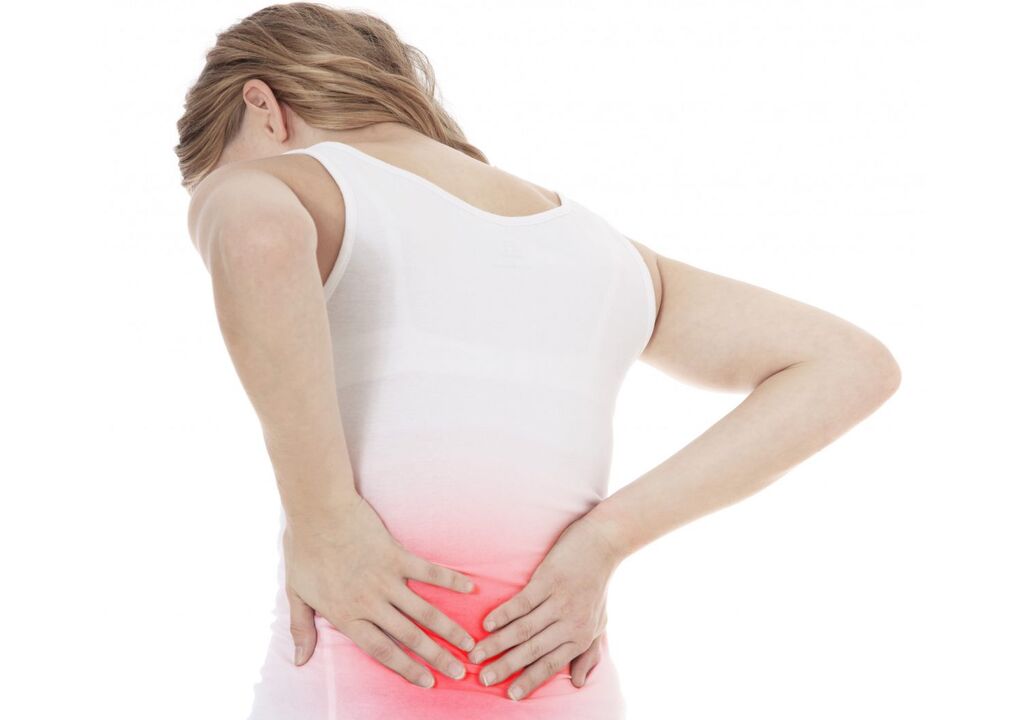
- Osteochondrosis of the lumbar spineoccurs in people who have increased physical activity, which may have an impact on reproductive function.
- Osteochondrosis of the sacral spineIt is dangerous because as a result of the course of the disease, nerve endings and blood arteries can be compressed.
- Extensive osteochondrosis of the spinecharacterized by a combination of lesions of two or more of its parts.This case is considered the most severe and difficult to treat.
Like many other diseases, osteochondrosis of the back is painful and progresses to different stages of severity.
In medicine, there are several stages of back disease:
- First stage- onset of the disease.The patient does not notice any special changes in the body; only slight discomfort is felt in one of the parts of the back during an unusual position or active movements.As a rule, these symptoms are not given much importance, and they are associated with other causes of manifestation.
- Second stageis characterized by the manifestation of pain, since at this stage the process of destruction of cartilage tissue begins; without timely medical intervention, the process of reducing the intervertebral gap may accelerate, which will entail pinching of nerves, lymphatic vessels or blood arteries.
- At the third stagethere is a pronounced deformation of the spine.Treatment at this stage will reduce the rate of development of the disease and possibly stop further curvature of the spine.
- Last stagedevelopment of the disease entails complete disability of the patient.At this stage, all processes associated with the disease are irreversible.The patient may have difficulty moving, insurmountable pain accompanies every movement, the spine shifts significantly, cartilage tissue becomes denser, and bone tissue grows pathologically.
Osteochondrosis: symptoms and diagnosis
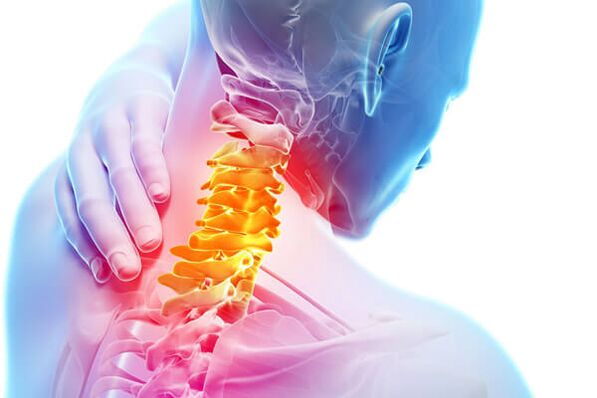
Many symptoms of the disease can be confused with other diseases.
The thing is that the deformed parts of the back put pressure on nearby organs, which cause corresponding pain.
Some young patients do not even know or realize that they may have such a disease, believing that osteochondrosis is the lot of old age, which, of course, is wrong.
Symptoms of the disease:
- pain and discomfort in the cervical region, sternum or lower back;
- a secondary symptom is muscle atrophy in the affected area;
- due to postural deformation, internal organs suffer, which in turn also exhibit dysfunction;
- there is numbness in the arms or legs;
- increased feeling of cold in the lower extremities;
- headache, dizziness occurs;
- nausea appears;
- the patient may lose consciousness;
- the appearance of floaters or spots in the eyes is possible;
- Arterial spasm of the foot occurs.
With age, the secretion of intervertebral fluid decreases, intervertebral discs become less elastic and undergo flattening, which is an intervertebral hernia.
This is important.If similar symptoms appear, contact the right specialist!
To undergo an examination, it is necessary to contact the following specialists when the first signs are detected: a neurologist, a neurosurgeon, a traumatologist.They will refer you for examination and make an accurate diagnosis.
To prevent the development of the disease in a timely manner, it is necessary to identify it at an early stage of development.To do this, fluoroscopy, magnetic resonance or computed tomography of the spine is performed.Sometimes additional examination of blood vessels and nerve endings is required.
Treatment of osteochondrosis: medication and surgery

Back disease can be treated in different ways, depending on the severity of the injury.Treatment methods and other areas of health improvement and prevention are selected by a specialist who first carries out diagnostic measures.Treatment of osteochondrosis takes an integrated approach.First of all, the main goal is to relieve pain and distribute the load on the spine.
To maintain the spine in the correct position and due to muscle atrophy, it is necessary to purchase and wear a special support corset.In the acute course of the disease, strict bed rest on a hard surface is indicated.
In some cases, a conservative approach to treatment is not suitable and surgical intervention must be used.Also, sometimes specialists diagnose spinal muscular atrophy, a disease previously considered incurable.Currently, a medicine has emerged that can cope with this disease.
Drug treatment of osteochondrosis
Treatment without the use of medications is almost impossible, since inflammation and pain can only be relieved by using the appropriate drug.The drugs block the pain.There are blockades for intramuscular administration, point, epidural, intraosseous.Only a specialist will determine what type of blockade is needed in your case.Restorative vitamin therapy is carried out comprehensively.
Surgical treatment of osteochondrosis
It happens that conservative treatment of osteochondrosis is unsuccessful, and pain interferes with life, the disease progresses, takes on a complex form, and there is nothing left to do but resort to surgical resolution.The main goal of such an intervention is to reduce pressure on the spinal cord, which is most often caused by a hernia.This approach to treating the disease can only be determined by the attending physician.
Massage and manual therapy
Treatment of osteochondrosis must be carried out in a complex manner.This may include massage and manual therapy.These procedures should be carried out by a qualified specialist who will not harm or worsen the existing condition.
Massage and hydromassage helps normalize general condition, muscle tone, improve blood circulation, and normalize the functioning of the nervous system.
Treatment is possible with manual therapy.Manual therapy is used in an individually developed treatment program.The therapy helps improve blood circulation, lymphatic circulation, strengthen the immune system, and improve the functioning of the musculoskeletal system.
Osteochondrosis disease: treatment with traditional methods, complications and prevention
Osteochondrosis can be treated in combination with specially selected physical therapy exercises.Certain exercises with measured load on the desired areas of the body will strengthen the muscles and create a muscular corset for the spine.Thus, metabolism and blood circulation are normalized, and nutrition of the intervertebral discs is restored.The disease osteochondrosis stops developing after a course of therapeutic physical training.
A useful habit would be to start the morning with therapeutic exercises, which will prepare your motor system for the upcoming loads.
Swimming, as a therapeutic sport in this case, will have a beneficial effect on the health of the spine.
Physiotherapy
The therapy also has an effect on osteochondrosis.Physiotherapy enhances the effect of medications and relieves pain.The procedures are carried out with laser, current, ultrasound, and magnet.The therapeutic dose is specially selected and individually adjusted.Therapy can be carried out at any stage of the disease osteochondrosis.
Treatment with folk remedies
The disease osteochondrosis can also be treated with folk remedies, but you should definitely consult with your doctor.Folk remedies have a minimum of side effects, but allergic reactions to some components are possible.
There are many herbal recipes that help treat the disease.The collection helps relieve inflammation and also eliminate pain.You can select ready-made preparations for the treatment of the disease, in a certain dosage.
You can prepare your own ointment, rubbing mixture or compress according to the recipe.For example, a mixture for rubbing: radish juice (200-300 ml), honey (200-300 g), vodka (100 ml).
You can also make a tincture of cinquefoil and rub the sore spot before going to bed, then tie it with a warm scarf.
Compress of sea salt (300 g), dry seaweed (5-6 packs).The listed ingredients are poured with water, approximately 50 degrees, allowed to brew for about 30 minutes, then applied to the affected area using a gauze cloth, covered with polyethylene and a warm cloth on top.The compress is left for 5-6 hours, the course is 10 procedures.
Steam the burdock leaf over steam for 10-15 minutes, then apply to the sore area, covering with polyethylene and a warm cloth.
Half a glass of elderberry is infused with 0.5 liters of vodka for 7 days, then rubbed into the surface of the skin on the affected area.
This is important.Do not forget that treatment with folk remedies alone will not have the desired effect; treatment must be comprehensive.
Diet

Everyone has long known that a healthy diet is the key to health, but not everyone understands the connection between nutrition and musculoskeletal diseases.In order to prevent further progression of the disease and the occurrence of complications, it is necessary to follow a diet.Due to the fact that excess weight puts stress on the affected spine, it is necessary to control the intake and output of fluids and food, and control weight.
The menu should include foods that satisfy hunger and help cleanse the intestines (vegetables, fruits, cereals, dairy and fermented milk products).
It is worth refraining from foods that retain salts in the body and promote fluid accumulation (pickles, smoked foods, coffee, alcohol, soda).
Do not overuse baked goods and sweets, as consuming these products leads to excess weight.
Meals can be from 4 to 6 times a day.If your body weight is not excessive, then 4-5 times is enough; if your body weight exceeds the norm, then you should eat small portions of food 5-6 times a day.
The drinking regime should be limited to: 2-2.5 liters per day, no more, no less.
With the help of some products that contain chondroitin, it is possible to strengthen the ligaments of the intervertebral discs and restore the cartilage structure (jelly, jellied meat, chicken wing broth, jellied fish).
Proper nutrition is the key to preventing diseases such as osteochondrosis.
Complications
If you start osteochondrosis, complications are more than likely to occur.
Complications that arise due to osteochondrosis become severe and irreversible.
- The first complication may be a vertebral hernia as a result of a decrease in intervertebral fluid and flattening of the discs.
- Protrusions appear—bulging of the spinal disc into the spinal canal.
- Salt deposits in the spine.
- A spinal cord stroke may occur.
- Limbs atrophy.
- Paralysis of the lower extremities.
- Subluxations of the vertebrae are possible.
- Kyphosis, scoliosis and other pathological curvatures of the spine occur.
- Sciatica may occur.
To avoid complications, it is necessary to regularly carry out a preventive treatment course in compliance with diet and physical activity.
Prevention
Preventing a disease is much easier than treating it later.
To prevent the development of osteochondrosis, you need to follow a number of rules:
- Lead an active lifestyle: play sports (swimming is especially good for back health), do exercises in the morning.
- When performing long periods of sedentary work, take breaks to warm up.
- Watch your diet, drink and excess weight.
- Make sure your posture is correct while working and walking.
- Minimize wearing high heels.
- Try to take a comfortable and correct position while sleeping.
- Buy an orthopedic mattress or pillow.
- Try to reduce your carrying of heavy objects or ensure that you lift weights correctly.
- Choose a seat with a comfortable backrest for support.
It is worth remembering that spinal disease is quite serious and does not have a specific age.Osteochondrosis can occur both at a young age and in old age.When the first symptoms of the disease appear, you should consult a neurologist or traumatologist.
If the disease has already manifested itself, then do not forget that you need to periodically visit a doctor who will monitor the course of the disease, give recommendations and prescribe an appropriate course of treatment or preventive measures.For existing osteochondrosis, seasonal treatment and preventive courses are carried out 2 times a year.
By following simple rules, you can maintain your health or avoid complications and further development of the disease.
The spine is the foundation of our body, which must be protected.Movement, proper nutrition, a healthy lifestyle are the key to health!